Living with arthritis can make everyday activities such as walking, climbing stairs, exercising, or even getting out of bed uncomfortable. Joint pain, stiffness, tenderness and swelling can vary from person to person and may become more noticeable after physical activity.
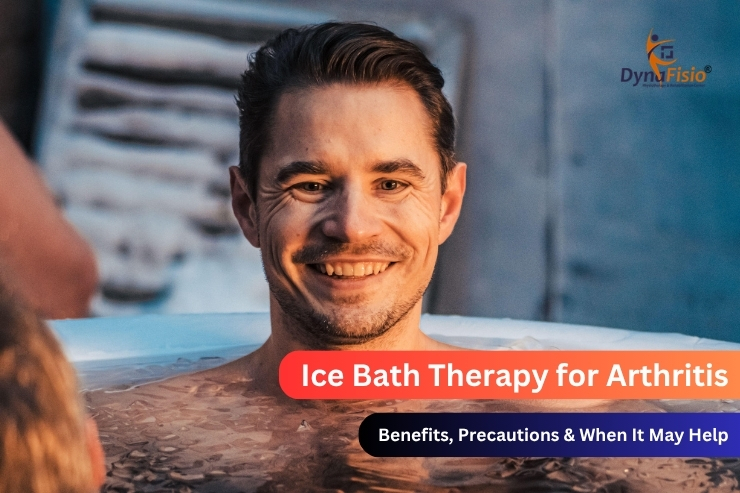
Alongside exercise therapy, strengthening, mobility work and other physiotherapy approaches, cold therapy is sometimes used to manage certain arthritis symptoms. One form that has become increasingly popular is ice bath therapy, also known as cold-water immersion.
But is sitting in cold water actually beneficial for arthritis? More importantly, is it safe for everyone?
At Dyna Fisio, Dr. Jyoti Arya and the physiotherapy team assess the patient's condition, symptoms and health history before recommending cold therapy as part of a broader rehabilitation or pain-management programme.
Ice bath therapy involves immersing part or most of the body in cold water for a controlled period. Exposure to cold causes blood vessels near the skin to constrict temporarily and can reduce nerve activity in the exposed area, which may decrease the sensation of pain for a short period.
For people with arthritis, this cooling effect may be useful when a joint feels particularly sore, warm or swollen, especially after activity. However, an ice bath should be viewed as a symptom-management or recovery technique, not as a treatment that cures arthritis.
The type of arthritis matters too. Osteoarthritis, rheumatoid arthritis and other inflammatory joint conditions do not behave in exactly the same way, so the same cold-therapy routine should not automatically be recommended to everyone.
Cold exposure can decrease the sensitivity of nerve endings in the affected area. This may temporarily reduce pain perception and make an uncomfortable joint feel calmer.
For some arthritis patients, this can be useful after exercise or during periods of increased joint discomfort. The effect, however, is usually temporary and should not replace treatment aimed at improving joint function, strength and mobility.
Swelling is common in many joint conditions. Cold causes temporary vasoconstriction, which can help manage local tissue response and may provide relief when joints feel swollen or warm.
This is one reason cold therapy is commonly incorporated into rehabilitation and sports recovery programmes.
Regular physical activity is important for many people with arthritis, but joints and surrounding muscles may sometimes feel sore after exercise. When clinically appropriate, cold-water immersion may be used as part of a post-exercise recovery routine to manage soreness.
The goal should not be to avoid exercise because of arthritis. Instead, an appropriate physiotherapy programme can help determine the right balance between movement, strengthening, recovery and symptom management.
Arthritis affects joints, but surrounding muscles can also become tired or sore, particularly when they compensate for reduced joint movement. Cold-water immersion is widely used in sports recovery to help reduce the perception of muscle soreness after demanding physical activity.
This may be particularly relevant for active adults with arthritis who want to continue exercising while managing their symptoms responsibly.
When pain or swelling decreases, some people may find movement more comfortable for a period after cold therapy.
However, this does not necessarily mean the underlying arthritis has improved. Long-term improvement generally requires an appropriate combination of movement, strengthening, mobility exercises, load management, lifestyle measures and medical management where necessary.
Both approaches use cold, but they serve slightly different purposes. An ice pack provides targeted cooling to a specific area, such as one painful knee, ankle or shoulder. It can be more convenient when symptoms are limited to one joint. An ice bath or cold-water immersion exposes a larger area to cold and may be considered for broader lower-body recovery, particularly after physical activity.
For someone with arthritis affecting only one joint, whole-body cold immersion may not always be necessary. A physiotherapist can help determine whether local cold therapy, cold-water immersion, heat therapy or another recovery technique is more suitable.
This is one of the most common questions arthritis patients ask. There isn't a single answer that works for everyone.
Cold therapy may be more comfortable when:
Heat may be more comfortable when:
Some patients may benefit from different approaches at different times. Rather than assuming that either heat or ice is universally better for arthritis, treatment should be selected according to the patient's symptoms and medical condition.
Ice bath therapy isn't appropriate for everyone. Cold exposure affects circulation, skin sensation and the cardiovascular system, so medical conditions and individual tolerance need to be considered.
People should seek professional medical advice before trying an ice bath if they have conditions affecting circulation, cardiovascular health, sensation or their ability to tolerate cold. Extra caution may also be necessary for older adults and people taking medications or living with multiple medical conditions.
Cold therapy should never become an endurance challenge. If you experience severe shivering, dizziness, unusual numbness, breathing difficulty, chest discomfort, significant skin colour changes or feel generally unwell, stop the cold exposure and seek appropriate medical assistance if symptoms are concerning or persistent.
The idea that "colder and longer is better" is incorrect.
There is no universal duration that is appropriate for every arthritis patient. The appropriate exposure depends on factors such as:
For beginners in particular, professionally guided and conservative cold exposure is preferable to attempting extreme temperatures or prolonged immersion.
Cold therapy may provide temporary relief from knee pain or swelling in some people with knee osteoarthritis, particularly following physical activity.
But an ice bath alone cannot address common contributors to functional difficulty such as reduced quadriceps strength, poor movement mechanics, restricted mobility or inappropriate loading.
A comprehensive knee arthritis programme may therefore involve strengthening exercises, mobility work, activity modification, weight-management guidance where relevant and other physiotherapy interventions. Cold therapy can be an adjunct to rehabilitation, rather than the entire rehabilitation programme.
Rheumatoid arthritis is an inflammatory autoimmune condition and requires medical management. Some individuals may find local cold therapy helpful for temporarily managing painful or warm joints. However, whole-body cold-water immersion should not automatically be assumed to be appropriate.
People with rheumatoid arthritis should discuss cold therapy with their treating doctor or physiotherapist, particularly when symptoms are severe, medications have recently changed, or other health conditions are present.
No. Ice bath therapy does not cure arthritis.
It may help some people temporarily manage symptoms such as pain, post-activity soreness or swelling. Arthritis management usually requires a broader strategy based on the type of arthritis and the individual's needs. For many patients, physiotherapy focuses on:
Cold therapy can potentially complement these strategies when appropriate.
A common mistake is copying ice bath routines used by athletes, celebrities or fitness influencers without considering individual health conditions.
A professional athlete recovering after intense training has very different requirements from a person managing osteoarthritis or an inflammatory joint condition.
At Dyna Fisio, cold therapy can be considered within a personalised physiotherapy and rehabilitation plan rather than used as a one-size-fits-all treatment.
Dr. Jyoti Arya evaluates factors such as pain pattern, joint mobility, muscle strength, activity levels, functional limitations and relevant medical history before recommending suitable recovery strategies.
If you are looking for Ice Bath Therapy in Gurgaon, Dyna Fisio offers physiotherapy and recovery services with a focus on supervised and individualised care.
Under the guidance of Dr. Jyoti Arya, patients can receive an assessment to understand whether cold therapy is appropriate for their particular condition and how it can fit alongside their physiotherapy programme.
For people searching for the Best Physiotherapist in Gurgaon or a Celebrity Trusted Physiotherapist in Gurgaon, the important consideration should always be more than a label—it should be whether the treatment plan is based on proper assessment, patient safety and individual recovery goals.
At Dyna Fisio, the aim is to combine modern recovery techniques with evidence-informed physiotherapy rather than recommending a therapy simply because it is trending.
It may temporarily reduce pain, swelling or post-activity discomfort for some people with arthritis. Its suitability depends on the type of arthritis, symptoms and overall health.
Cold exposure may temporarily help manage swelling and discomfort, but ice baths do not treat the underlying cause of arthritis or replace appropriate medical treatment.
Some people with knee arthritis may experience temporary relief after cold therapy, especially when the knee feels sore after activity. A physiotherapist can determine whether an ice bath, local ice pack or another approach is more appropriate.
Cold may be useful when a joint feels warm, swollen or painful after activity, while heat may feel better for stiffness and muscle tightness. The best option depends on your symptoms and condition.
Daily ice baths are not automatically necessary or appropriate. Frequency should depend on your symptoms, health status, response to cold and professional recommendations.
People with certain cardiovascular, circulation, sensory or cold-sensitivity conditions may need to avoid or modify cold-water immersion. Speak with a qualified healthcare professional if you have an existing medical condition.
No. Ice baths primarily offer short-term symptom management. Physiotherapy addresses important areas such as strength, mobility, movement, function and exercise tolerance.
Dyna Fisio provides Ice Bath Therapy in Gurgaon as part of its physiotherapy and recovery services. An assessment can help determine whether cold-water therapy is appropriate for your condition and recovery goals.
Ice bath therapy has become popular in sports, fitness and recovery, but arthritis management requires a more individualised approach.
For some patients, carefully selected cold therapy may provide temporary relief from pain, swelling or post-exercise soreness. For others—particularly those who experience significant stiffness or have health conditions that make cold exposure unsuitable—another approach may be better.
The key is to treat the person rather than simply treating the symptom.
If arthritis is affecting your walking, exercise, work or everyday activities, Dyna Fisio in Gurgaon, under the guidance of Dr. Jyoti Arya, can help you understand your condition and develop a personalised physiotherapy and recovery programme.